From WooCommerce to Shopify,With a Brand Inside the Brand
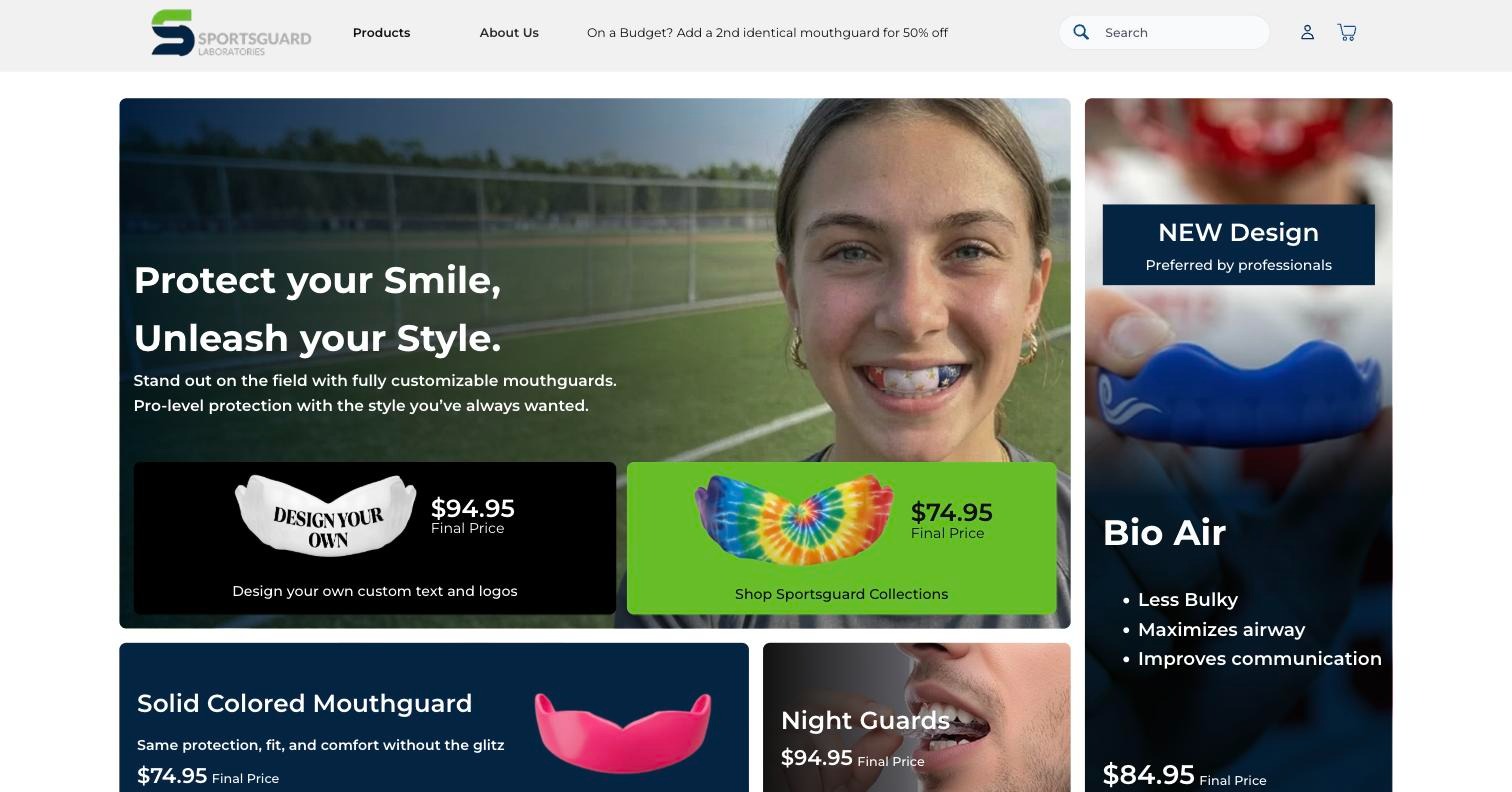
A WooCommerce store rebuilt on Shopify: 101 products, 36 collections and 16 pages, plus a co-branded storefront whose approval chain nobody had scoped. Seven people, waterfall, fifteen weeks against ten, on budget.

- Timeline
- 15 weeksagainst a 10-week scope
- Team
- 7 peopledesign · dev · content · SEO
- Budget
- Low five figuresowned end to end
- Platform
- ShopifyWooCommerce → Horizon
- Method
- Waterfallphase gates with client sign-off
- Built
- 101 products36 collections · 16 pages
- Brand partner
- Shock Doctorco-branded storefront in-store
- Delivered
- On budgetdate renegotiated once
What the Old Store Was Costing Them
SportsGuard sells a product that doesn’t exist at the moment you buy it. Every order sends an impression kit out by mail, waits for the customer to take a dental impression at home and return it, then ships again once the mouthguard has been made to that impression in the company’s own lab. Three shipments per order, and one of them travels toward the warehouse rather than away from it.
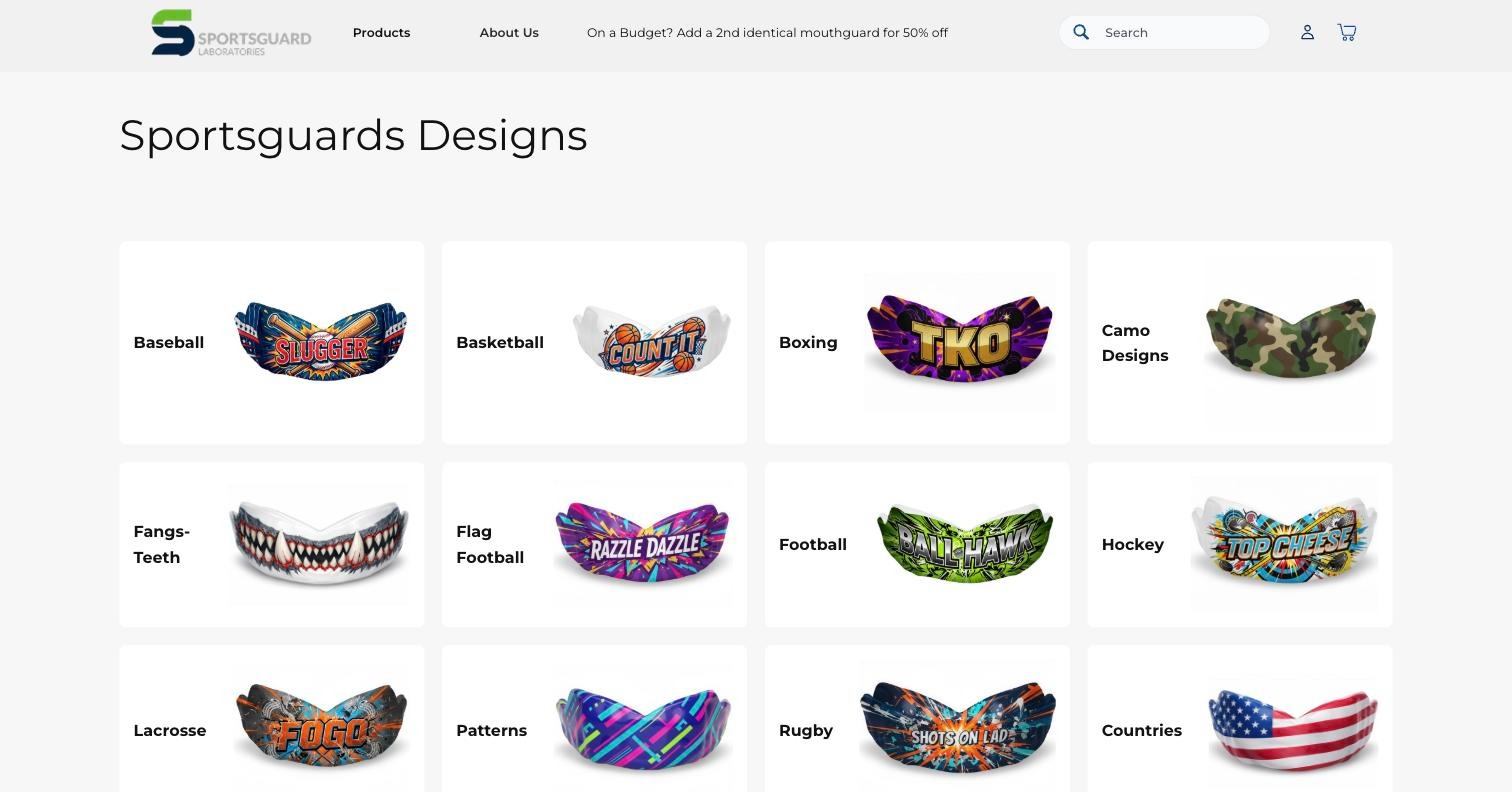
The old store ran on WooCommerce, and it merchandised that product like a printed catalogue. Designs were bundled into category-level products, so a single page called “Choose Patterns” stood in for every pattern in the range, with a plugin bolted on to handle configuration. Nothing about that structure gave an individual design its own page, its own imagery, or its own reason to rank.
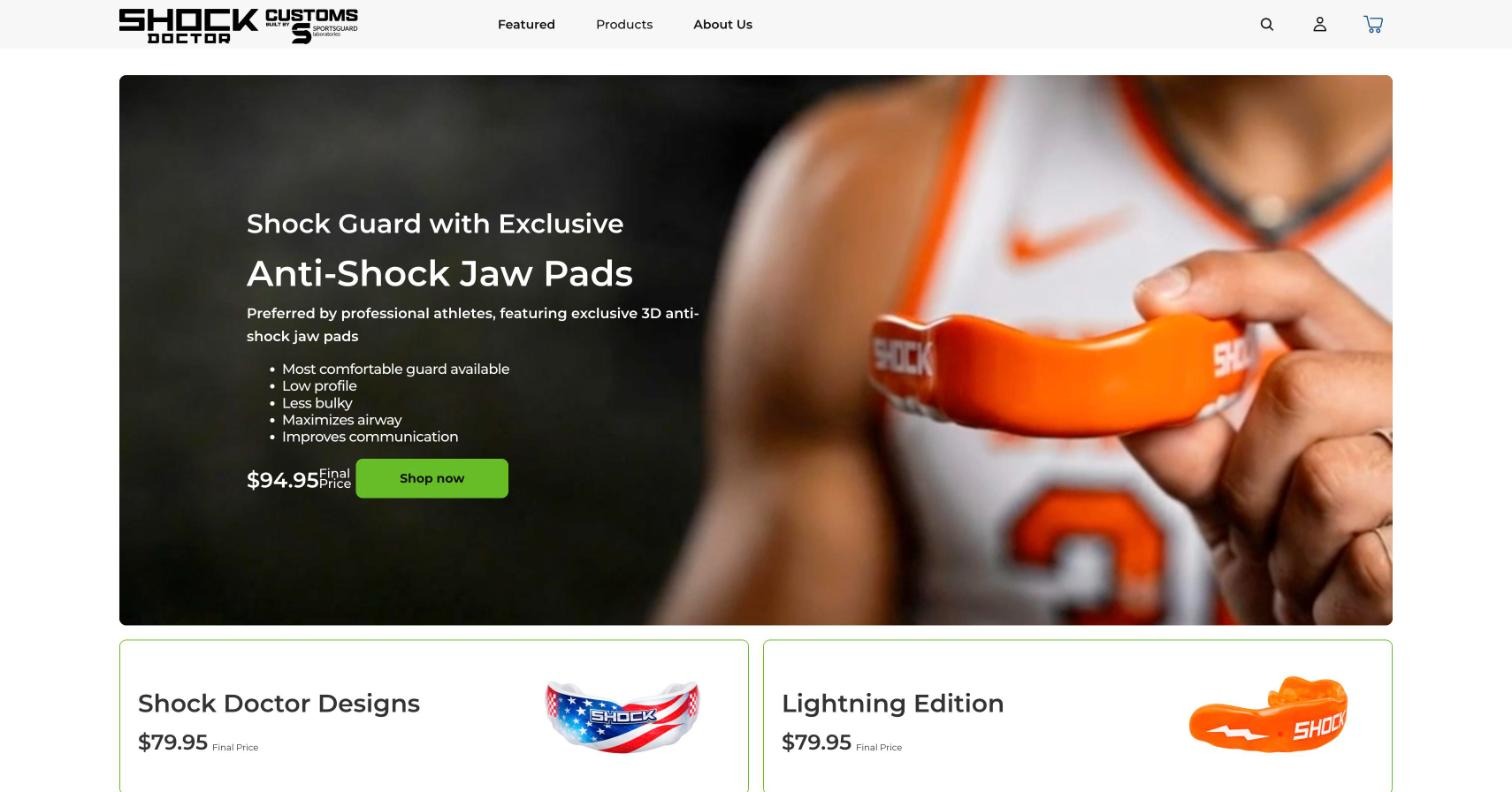
There was also a commercial reality the old store had no room for. SportsGuard had become the custom mouthguard manufacturer behind Shock Doctor, and Shock Doctor appears nowhere on the old site. The rebuild had to sell two brands from one storefront without either one looking like a tenant.
What I Owned
Project management, start to finish. I’m responsible for the fact that it shipped on budget, and for the conversation that moved the date instead of the number.
- Scoped the rebuild and set the phase gates across the original 10 weeks
- Coordinated 7 people across design, development, content and SEO
- Ran client communication, including a written update every day of the project
- Took the mid-project scope conversation to the client and moved the overflow into a retainer
- Re-aligned priorities when the schedule came under pressure from two directions
- Held the budget while the delivery date moved
How the Project Ran
Waterfall, with client sign-off between phases. One owner from the first call to the last QA pass.
Discovery
Before anything was designed or built, I worked to understand the business behind the store: how a custom mouthguard is made and shipped, who buys one, what the existing WooCommerce store was doing to get in the way, and what the new Shock Doctor relationship was going to require of the site.
Scope and Schedule
Discovery became a scope document written for the client to read and sign, not an internal checklist. It defined every service in the build across design, development, content and SEO, and set the boundary of each one. Ten weeks, phase-gated, with the cost broken down by service so the client could see what they were approving at each stage.
Migration Planning
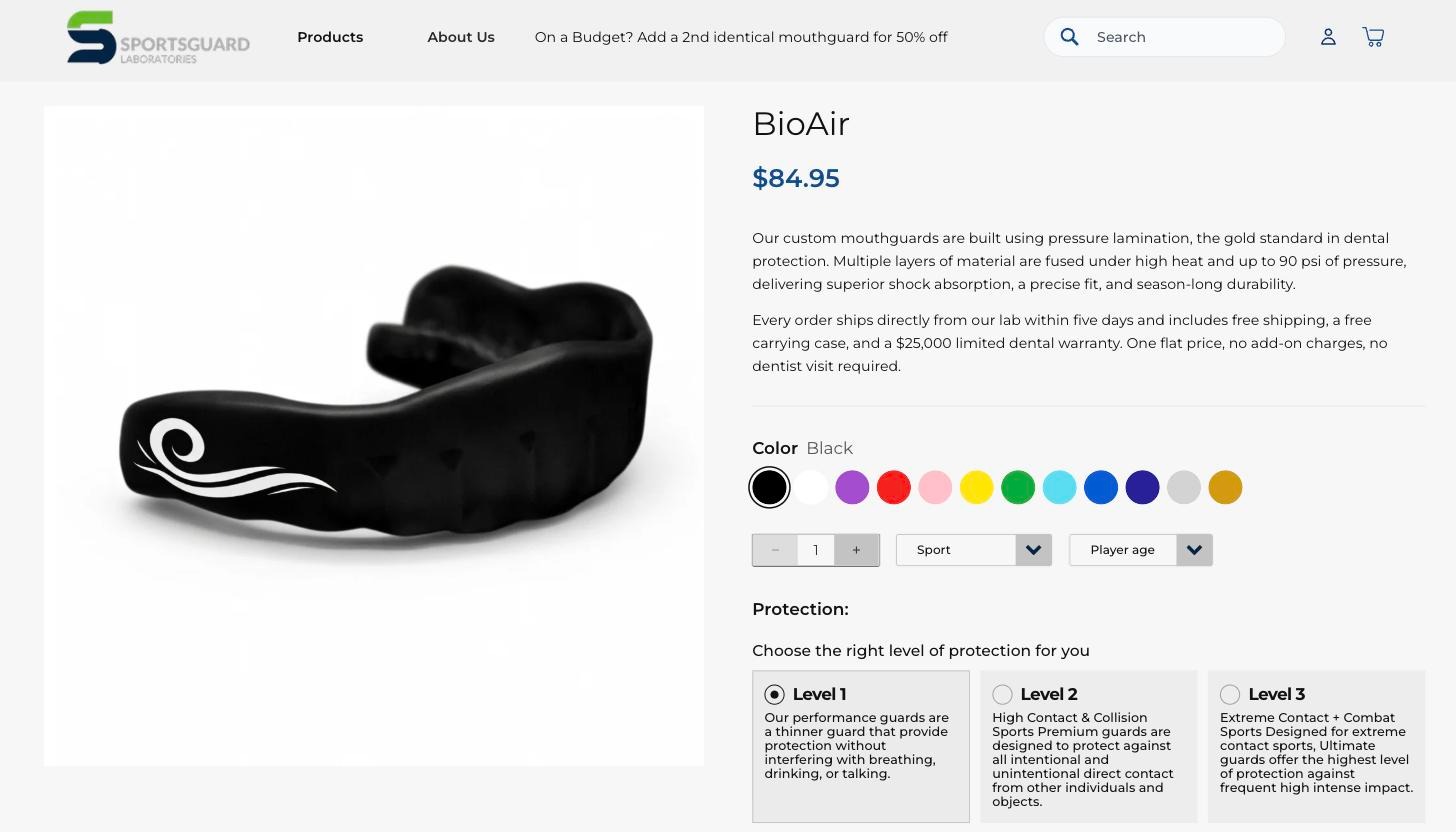
A new Shopify store, with the catalogue pulled across from WooCommerce and the rest rebuilt by hand where the old data structure didn’t survive the move. Customer accounts and order history came with it. Products that had been sold as design categories were broken apart so that individual designs could stand on their own pages.
Design, Content and Client Review
Phase-gated review, with one difference from a normal build: every page touching the Shock Doctor brand needed sign-off from a second organisation as well as the client. I ran both review loops in parallel rather than in sequence, because running them end to end was never going to fit.
Development Oversight
A Shopify build on the Horizon theme, customised well past its defaults. The product configurator was the centre of it, and the Shock Doctor section was built as a co-branded storefront inside the same store, with its own logo lockup, navigation and warranty page rather than a single landing page.
The Shipping BuildDifferentiator
Most Shopify stores ship a box once. This one had to send an impression kit out, bring a completed impression back on a prepaid label, and ship the finished guard after that, with international orders on top. We built it with custom order forms alongside Shopify’s own shipping configuration. Getting this wrong doesn’t cost you a delivery estimate, it costs you the order.
QA, Scope Control and Launch
Pages and products were approved and the project had moved into QA when the client came back with more work. I priced the boundary rather than the request: some of it we absorbed, the rest moved into a retainer that started after launch. Launched past the original date, inside the original budget.
Where It Nearly Went Sideways
Two problems. One moved the date. The other paid for itself.
Problem One: the Approver Nobody Scoped
Shock Doctor was not a logo to drop onto a page. Their section of the store carries their name in its own header, which meant a second organisation with sign-off over how their products were promoted, how those pages were designed, and how those orders would ship. None of that was in the ten-week plan, because none of it was known when the plan was written.
What It Meant Day to Day
Assets, product information and approvals now arrived on two organisations’ schedules instead of one, and neither of them was mine. A waterfall plan assumes you know who has to say yes before you commit to a date. This one didn’t, and that was a meaningful part of what pushed the project past ten weeks.
Problem Two: New Scope Arriving During QA
Six weeks in, with pages and products already approved and the project moved into QA, the client came back wanting more: more products, more product designs, and more work on the Shock Doctor section. Not one request, and not a short list.
What I Did About It
I said yes to the work and no to doing all of it inside this project. What could be absorbed without touching the budget, we built. Everything else moved into a retainer agreement that began once the initial build was complete. The client agreed, and the work that would have quietly eaten the project became work they were paying for on its own terms.
Outcome
The budget held. The date did not: ten weeks scoped, fifteen weeks delivered. The client had a written update from me every day of it, so the slip was never something they found out about, and the work that caused it either shipped inside the project or moved into the retainer. Given a choice between the two, I protected the number and renegotiated the calendar.
What Shipped
Client work is under NDA, so what’s shown here is the live storefront.
What It Delivered
The store launched recently, so these are delivery numbers rather than performance numbers.
Tools Used on This Project
Only what this build used.
Platform
Store Apps
Project Management
Client Review & QA
Communication
Get Insights in Your Inbox
Real lessons from managing websites that have to make money: conversion, SEO, UX, and the project decisions behind them. No spam, and you can unsubscribe anytime.
Need Someone to Own the Whole Project?
Whether you’re building something new or keeping a site running, I’m currently taking on new work. Tell me about it, and I’ll tell you exactly how I’d manage it.