An Automotive Shopify Rebuild,on Time and on Budget
A full theme rebuild for a parts retailer: roughly 35,000 products, 1,372 collections and 270+ brands, plus a year/make/model fitment system that had to survive the move intact. Nine people, twelve weeks, waterfall.

- Timeline
- 12 weeksdiscovery to launch
- Team
- 9 peopledesign · dev · copy · SEO
- Budget
- Low-to-mid five figuresowned end to end
- Platform
- ShopifyWarehouse 6.0 → Horizon
- Method
- Waterfallphase gates with client sign-off
- Catalog
- ~35,000 products1,372 collections · 270+ brands
- Migrated intact
- Fitment systemConvermax YMM + Garage
- Delivered
- On timeon budget
What the Old Site Was Costing Them
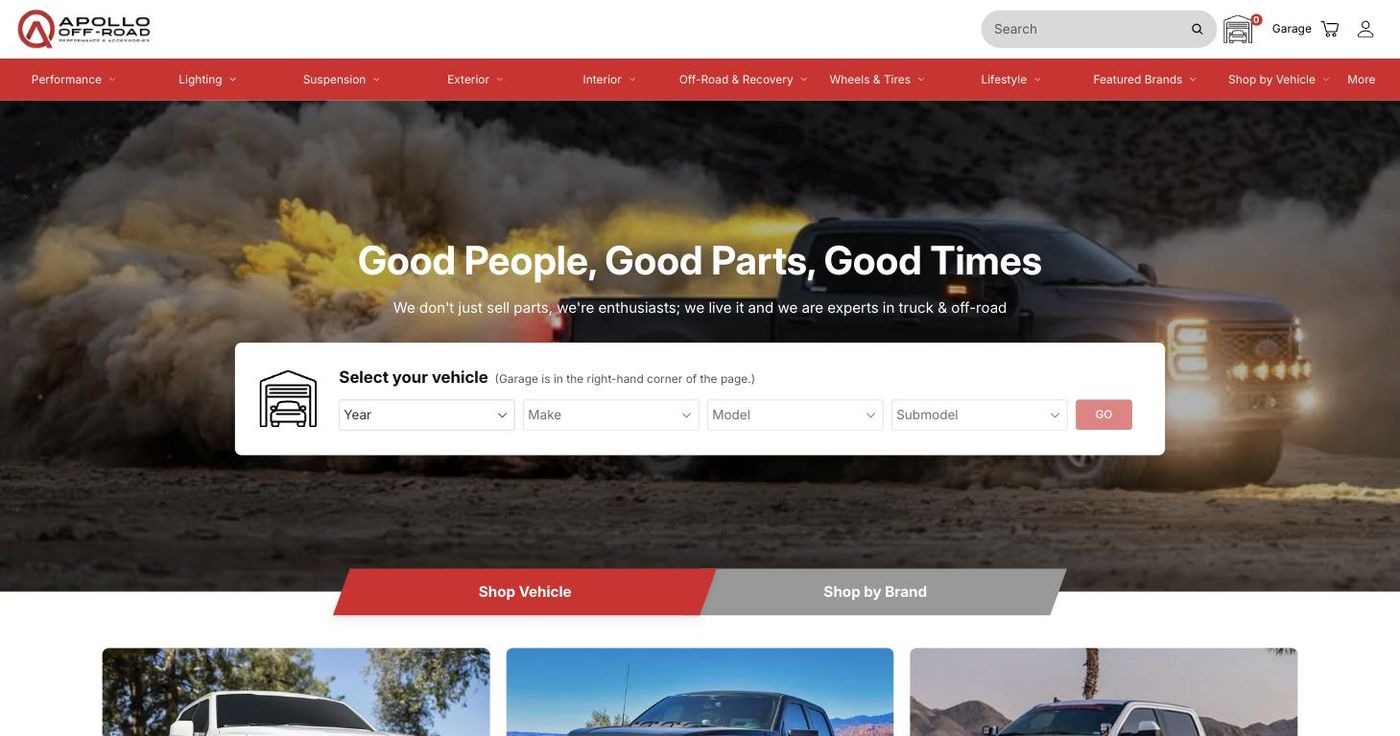
Apollo Off-Road sells parts that only fit specific vehicles. A lift kit for one truck is useless on another, and a wrong-fit order becomes a return, a support ticket, and usually a lost customer. Across 1,372 collections and more than 270 brands, the catalog was already too large to browse, and the store depended on its year/make/model fitment layer to be usable at all.
By 2026 the store was running on a premium large-catalog theme that had absorbed years of custom modification, with a vehicle-fitment integration and 41 installed apps layered on top of it. Routine merchandising and content changes meant touching theme code, and the category and vehicle pages that carry most of a parts retailer’s organic search traffic weren’t pulling their weight. The rebuild moved the storefront onto Shopify’s current Horizon architecture, where the team could make those changes without a developer.
What I Owned
Project management, start to finish. I’m responsible for the fact that it shipped on schedule, on budget, and without breaking a store this size.
- Scoped the rebuild and set the phase gates across 12 weeks
- Coordinated 9 people across design, development, copy and SEO
- Ran client communication and the weekly review cycle
- Audited all 41 installed apps before the build began
- Priced the mid-project Convermax request and took the number to the client
- Held the budget through two out-of-scope requests
How the Project Ran
Waterfall, with client sign-off between phases. One owner from the first call to the last QA pass.
Discovery
Before anything was designed or built, I worked to understand the business behind the store: the brand and who it sells to, the marketing goals, the platform they were running on, and their reasons for rebuilding. Scope, schedule, and every decision that followed were built on what came out of this phase.
Scope and Schedule
Discovery became a scope document written for the client to read and sign, not an internal checklist. It defined every service in the build, covering design, development, SEO and content, and set the boundary of each one. Alongside it I produced a proposal that broke the cost down by service and by phase, so the client could see exactly what they were buying at each stage before approving it.
Content Planning and CollectionDifferentiator
Sixteen pages of new copy tracked individually: homepage, brand and company pages, eight category landing pages and three vehicle collections, each with a named writer, a live link and a status. Client content is the usual reason a web build slips. This one didn’t.
Design and Client Review
Weekly review against the phase gates. When getting that review consistently became the project’s main risk, I moved feedback into BugHerd so the client could annotate pages directly instead of writing up notes.
Development Oversight
A full theme rebuild from Warehouse 6.0 onto Shopify’s Horizon architecture, carrying 41 apps and a live Convermax vehicle-fitment integration across the move.
Scope Control
Two requests arrived after the scope was agreed. I priced the larger one and put the number in front of the client; they deferred it. The smaller one we built inside the budget. Neither moved the launch date.
QA, Launch and Handoff
Launched on schedule, with every app and the fitment system working as before. Convermax went onto a follow-on phase.
Where It Nearly Went Sideways
Two problems, neither of which moved the launch date.
Problem One: the Review Bottleneck
The schedule depended on weekly client review, and getting it consistently was the hardest part of the project. In a phase-gated build, unreviewed work doesn’t just sit. It compounds, because the next phase can’t start and the one after that is already loaded.
What I Changed
I moved feedback into BugHerd, so the client could comment directly on the page instead of writing up notes, screenshotting, or describing a problem in an email. Lowering the effort of reviewing was the lever. The reviews weren’t late because the client didn’t care, they were late because the process asked too much of them.
Problem Two: a Scope Request After Dev Had Started
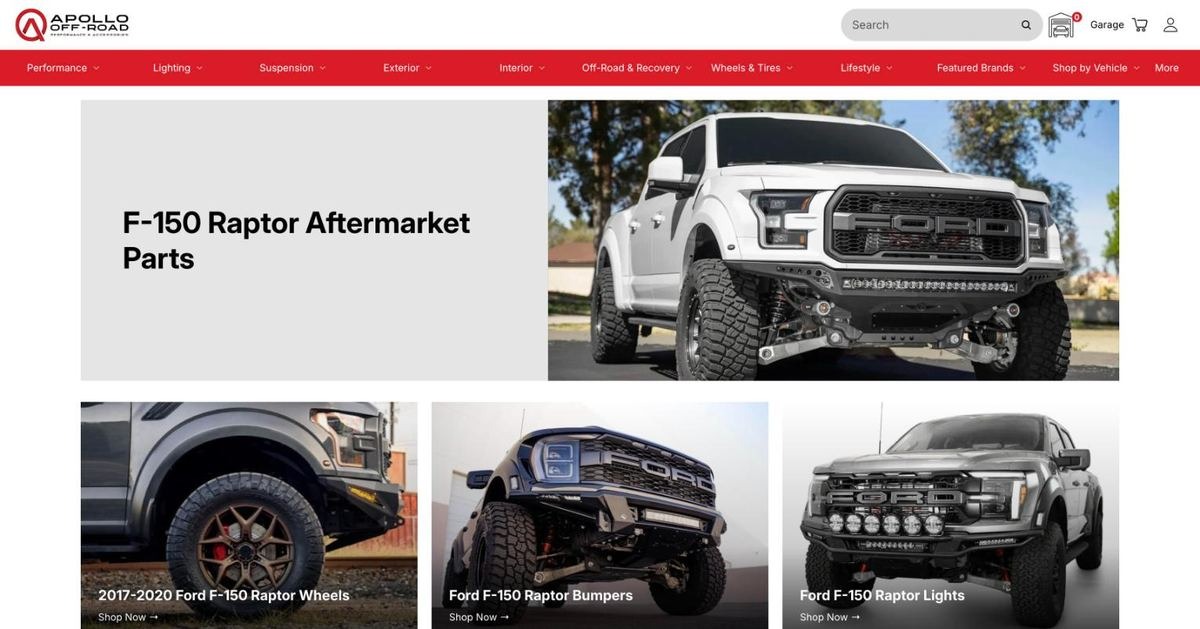
With the project scoped and development underway, the client asked us to rebuild the Convermax vehicle-fitment integration for the new theme. A set of custom vehicle collections, covering the F-150 Raptor, Raptor R and Ford Super-Duty, also sat outside what had been agreed.
What I Did About It
I priced the Convermax work and put the number in front of the client rather than absorbing it or letting it quietly expand the build. Seeing the cost, they chose to defer it to a follow-on phase after launch. The custom vehicle collections were the smaller ask, and we built those inside the original budget. One request absorbed, one priced, and the budget held either way.
Outcome
Launched on time and on budget with the fitment system running as it had before, and Convermax scheduled as separate work once the rebuild was live. Nothing was discovered late enough to force a choice between the date and the budget.
What Shipped
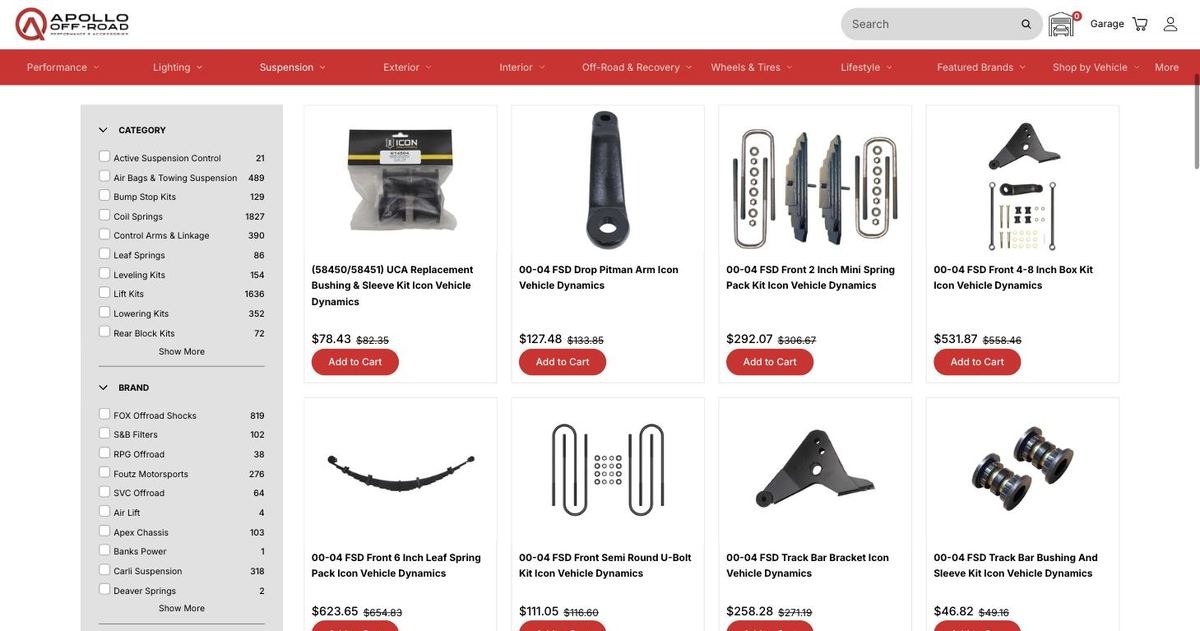
Client work is under NDA, so what’s shown here is the live storefront.
What It Delivered
What a 12-week rebuild of this size produced.
Tools Used on This Project
Only what this build used.
Platform
Project Management
Client Review & QA
Communication
Documentation
Get Insights in Your Inbox
Real lessons from managing websites that have to make money: conversion, SEO, UX, and the project decisions behind them. No spam, and you can unsubscribe anytime.
Need Someone to Own the Whole Project?
Whether you’re building something new or keeping a site running, I’m currently taking on new work. Tell me about it, and I’ll tell you exactly how I’d manage it.