Rebuilt on WordPress,Redesigned for Higher Conversions
A Duda site that buried its service pages two levels deep, rebuilt on WordPress with a flat, keyword-targeted page for every service. I researched, wrote and designed every page, and managed the build.


- Timeline
- 8 weeksagainst a 12-week scope
- Team
- 3 peopleme, a developer, the owner
- Budget
- Under budgetBy $3,000 at project close
- Platform
- WordPressDuda → Elementor and Rank Math
- Project type
- Migrationnew build, new URL structure
- Content
- 14 service pages2,000+ words each, all written by me
- Priorities
- Conversion firstthen AEO, UX and SEO, mobile first
- Delivered
- Four weeks earlyinside the original budget
A Site That Worked, But Did Not Compete
Chicago Garage Door was not short of customers. Nobody hired me to rescue a failing business, which meant the usual case for a rebuild did not apply and the project had to earn its budget on something else.
The old site was a Duda build that had been running for years. It listed the services, carried a contact form and gave out two phone numbers. What it did not do was compete for the searches that bring a garage door company its work.
Service pages sat two levels deep, behind dropdown menus: spring repair lived at /repair/garage-door-spring-repair, screens at /garage-doors/garage-door-screen, openers under a third parent again. That structure described the company’s internal categories. It did not describe the way a homeowner with a broken spring types a search.
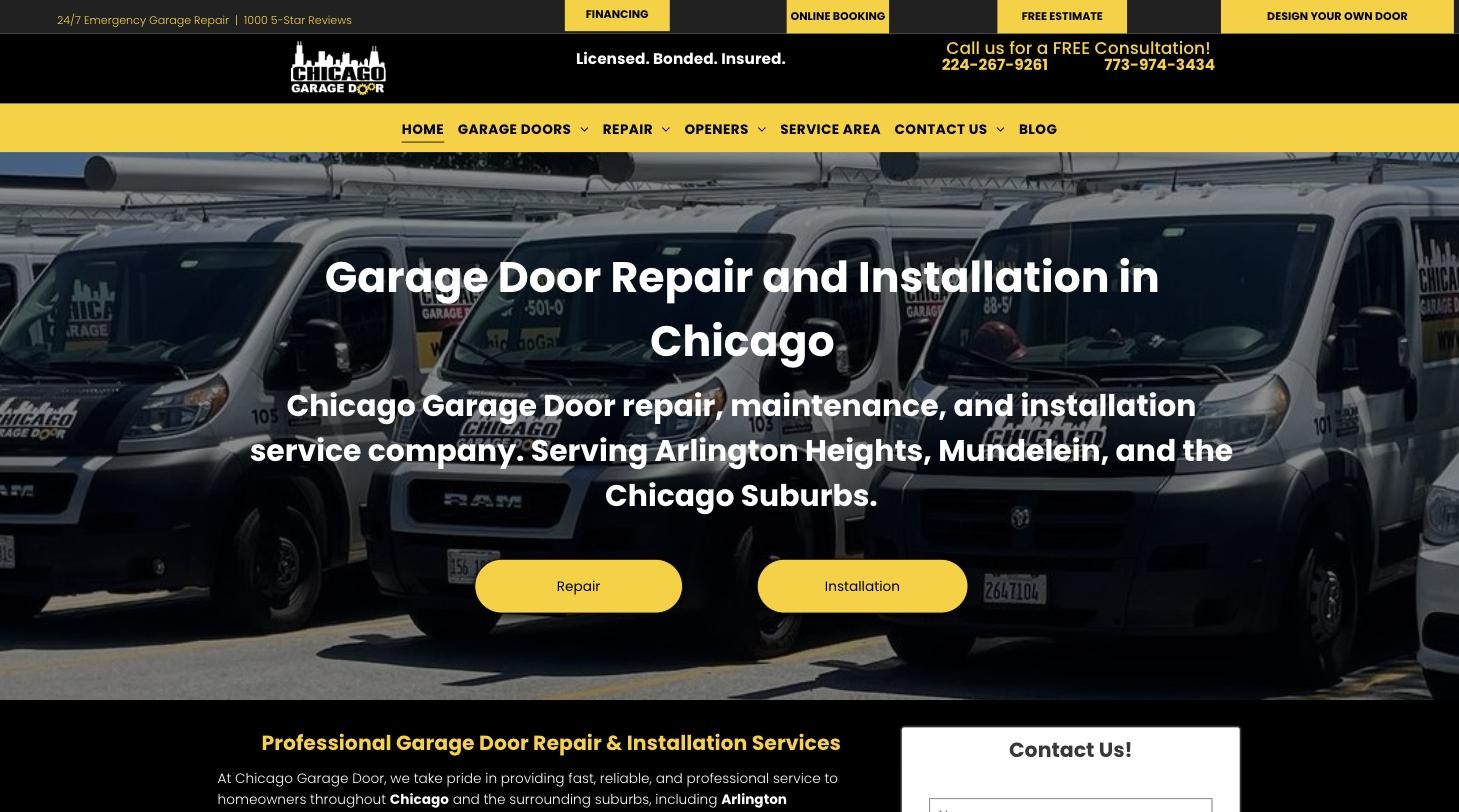
The homepage targeted Chicago, the broadest and most expensive term in the market, for a company based in Arlington Heights. Above every page sat four calls to action of equal weight, and the hero’s two buttons were category labels rather than a way to book work.
The brief I was given was a better online presence. What came out of the research phase was a platform move, a rewritten site and a different URL for almost every page on it.
What I Owned
A three-person team, so the strategy, the writing, the design and the schedule were all mine.
- Ran the keyword research and competitor analysis that set the site’s page inventory
- Wrote every word on the site, across 14 service pages and the homepage
- Designed the pages at concept level in UX Pilot, then refined them with the developer
- Mapped every old URL to its replacement and specified the redirects
- Managed the project end to end across a three-person team
- Rebalanced the phase plan when research and design ran past their estimates
How the Project Ran
Twelve weeks scoped, phase-gated, three people. The order of the phases is the reason the later ones went quickly.
Competitor Analysis
Before any keyword work, I looked at what the companies already ranking in the northwest suburbs were doing: which services got their own page, how deep their URLs ran, how much they wrote per page and what a searcher saw first. The gap was not effort. It was that this client’s pages were structured around the company rather than the search.
Keyword Strategy and Site ArchitectureLongest phase
The keyword work decided the shape of the site, not just its metadata. Each target term became one page, each page got a flat URL built from that term, and the nested hierarchy went away. Springs, cables, tracks, rollers, sensors, panels, weather seal, remotes, openers, screens, gates and commercial each became a page of its own instead of a section of somebody else’s.
Conversion-First Design
Three weeks against a normal one or two. Every page was designed around a single path: a geo-specific headline, review proof above the fold, a differentiated primary and secondary action, and a phone number that stays reachable while you scroll. Mobile first throughout, because a homeowner with a broken door is on a phone in a garage.
Content
Fourteen service pages, over two thousand words each, all written by me against the keyword plan. Each one runs the same spine: the symptom a searcher would recognise, what the fix involves, the process, transparent pricing tiers, proof, and a set of questions answered in plain language for the sake of both readers and the models that now summarise them.
Development Oversight
A WordPress build on Elementor with Rank Math handling the technical layer. My part was specifying what each page had to contain and reviewing what came back against the plan, rather than writing the templates myself.
URL Mapping and Redirects
Almost no URL survived the move, so every old address needed a decision: point it at its closest replacement, point it at the homepage, or retire it deliberately. Marketing pages and old posts with no equivalent were given a Gone response rather than left to rot as not-found errors.
QA and Launch
Launched in eight weeks against a twelve-week scope, three thousand dollars under budget. The site went live with a sitemap, an llms.txt file and structured data across the service pages.
Where the Extra Time Went
Two phases ran past their estimates. The project still finished four weeks early.
The Plan as Scoped
Twelve weeks, phase-gated, three people. A conventional split would have put a week or two into research, one or two into design, and the balance into content and build.
Research Ran Long
The competitor analysis and keyword strategy took longer than a standard pass because they were not producing a keyword list. They were producing the site’s page inventory and its URL structure. Getting that wrong does not cost you a ranking, it costs you a rebuild, and it is the most expensive thing to change once content exists.
So Did Design
Three weeks against a normal one or two. The client’s priority was conversion ahead of everything else, so the layouts had to be resolved rather than approximate: what a visitor sees first, what proof sits next to it, and which single action the page is asking for.
What That Left for the Build
By the time writing and development began, the page inventory was fixed, every page had its URL and its target term, and the layouts were settled. Content and development had nothing left to decide, and both ran faster than scoped.
Outcome
Eight weeks delivered against twelve scoped, and three thousand dollars under the scoped budget. Front-loading the two phases that determine everything else is a trade I would make again, and it is the reason this project finished early rather than in spite of it.
What Shipped
The old site is still readable in the Internet Archive, so this one can be shown rather than described.
The homepage. Same company, same services, same phone number. What changed is what a visitor is asked to do.
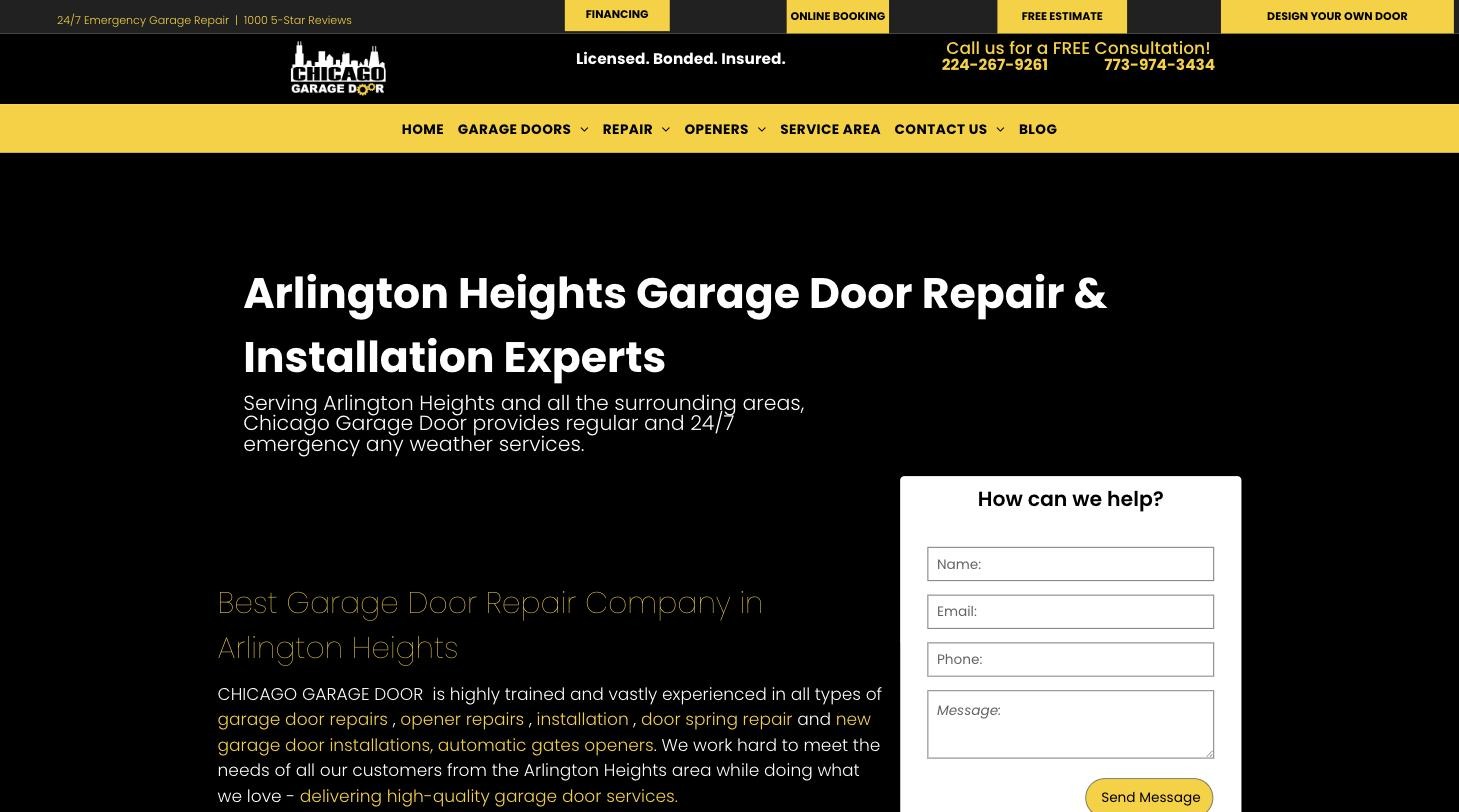
Location pages became service pages. The old site had a page per suburb; the new one has a page per service.

What It Delivered
Delivery numbers from the project, and technical facts that can be checked on the site today.
Tools Used on This Project
Only what this build used.
Platform
Keyword Research
Technical SEO
Design & Content
PM & Communication
Get Insights in Your Inbox
Real lessons from managing websites that have to make money: conversion, SEO, UX, and the project decisions behind them. No spam, and you can unsubscribe anytime.
Need Someone to Own the Whole Project?
Whether you’re building something new or keeping a site running, I’m currently taking on new work. Tell me about it, and I’ll tell you exactly how I’d manage it.